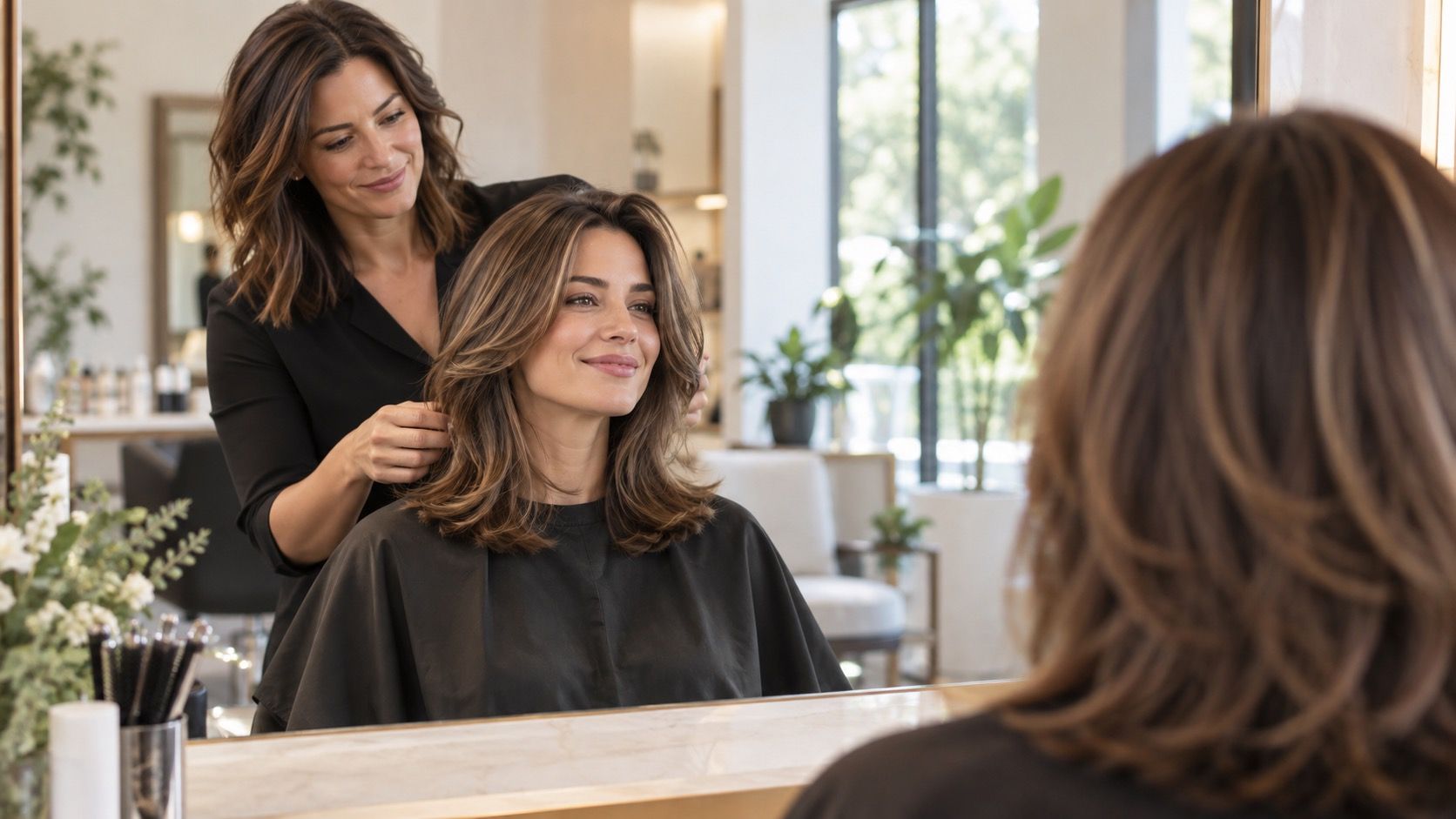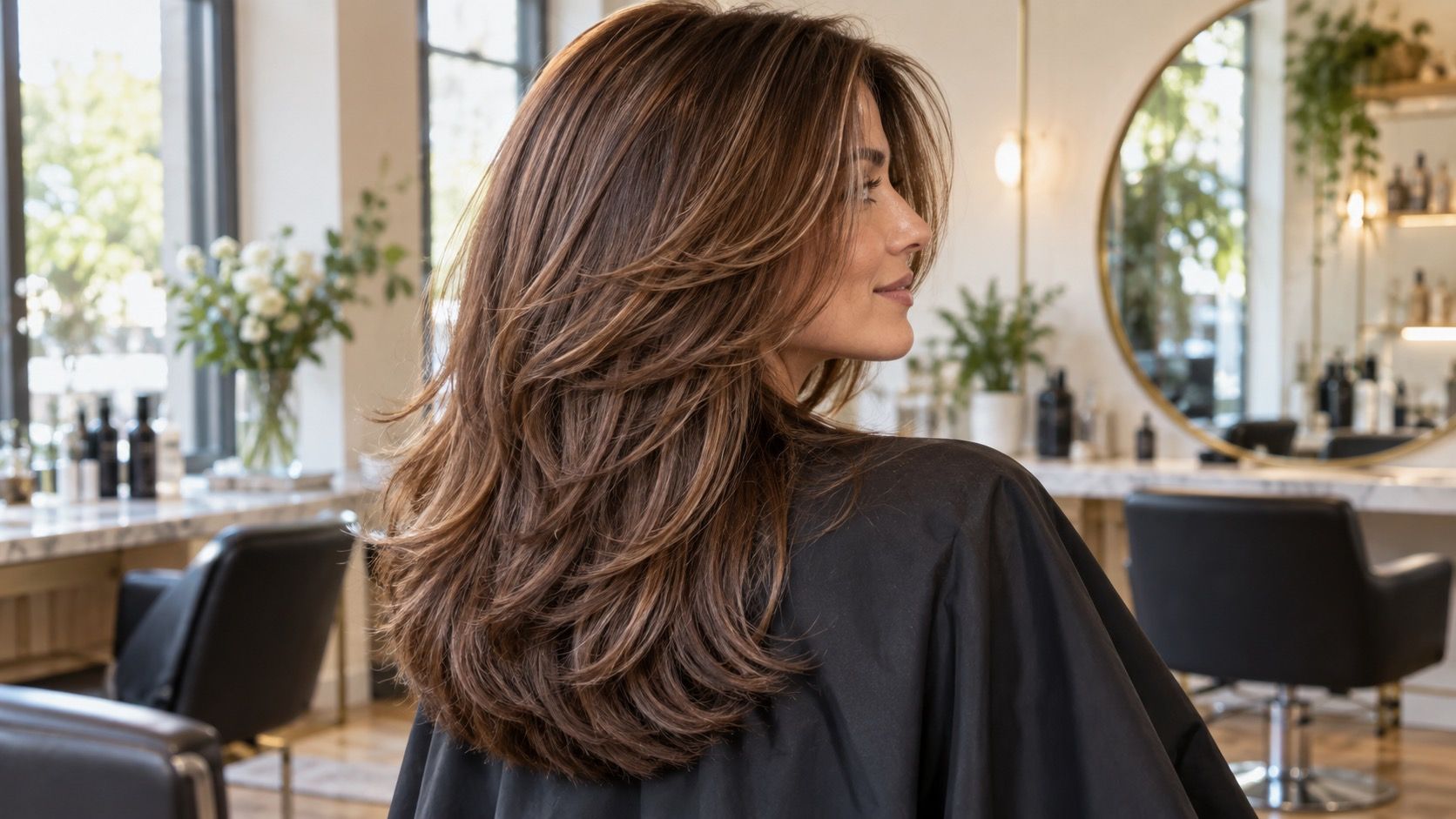
Wavy hair is often treated as indecisive straight hair, then cut and styled as though it will obey a straight-hair routine. It rarely does. A successful cut leaves room for the pattern to show up differently on different days, while still giving the hair a shape when the waves are softer than usual.
Read the pattern before you book
Waves are not identical from root to end. The underside may bend more strongly than the crown, one side may flip while the other lies flat, and the front may lose its pattern after heat styling. Photograph your hair after an ordinary wash and after a refresh; those two versions tell a stylist far more than a label such as 2A or 2C.
Set length and layers together
Density matters alongside wave pattern. Dense wavy hair can grow outward and need internal space, while lower-density waves may need a blunt base to avoid looking airy. Check how far the hair springs up as it dries. That shrinkage determines whether a planned collarbone cut will actually sit at the collarbone.
Use this part of the decision as a small at-home test rather than a rule. Notice what happens on a normal day, in the light you usually see, and after the hair has moved through your routine. A result that works only immediately after styling is less useful than one that still feels balanced later. Take a clear photo from the front and side if you are unsure; it can make the proportion, weight, or color relationship easier to discuss at the next appointment.
Length controls how much gravity stretches the wave. Very long hair may pull a loose pattern almost straight, while a shorter cut can make the same hair look much more textured. Neither result is better; choose based on how much visible movement you want and how often you are willing to restyle the top layers.
Layers help wavy hair avoid a solid triangle, but their placement matters. Long, connected layers can encourage movement without making the ends disappear. Short, disconnected layers may work on a strong pattern yet can create a puffy halo on softer waves. Ask where the first layer will land when the hair is dry, not merely when it is wet.
Use this part of the decision as a small at-home test rather than a rule. Notice what happens on a normal day, in the light you usually see, and after the hair has moved through your routine. A result that works only immediately after styling is less useful than one that still feels balanced later. Take a clear photo from the front and side if you are unsure; it can make the proportion, weight, or color relationship easier to discuss at the next appointment.
Bobs and shorter wavy shapes
A long bob is a dependable option because it gives waves a clean frame while leaving enough length for the pattern to settle. A slightly textured edge can look relaxed, but too much point cutting may make soft waves look ragged. If you tuck hair behind your ears, test whether the shorter pieces will spring forward again.
A jaw-length bob can be striking on a defined pattern, although it needs an honest discussion about width. Hair that expands at the cheekbones can change the proportions of the cut. A longer front, a softer parting, or leaving a little more length around the face can make the style easier to wear between salon visits.
Use this part of the decision as a small at-home test rather than a rule. Notice what happens on a normal day, in the light you usually see, and after the hair has moved through your routine. A result that works only immediately after styling is less useful than one that still feels balanced later. Take a clear photo from the front and side if you are unsure; it can make the proportion, weight, or color relationship easier to discuss at the next appointment.
Treat fringe as a separate texture decision
Wavy fringe is not just a smaller version of the rest of the haircut. It dries faster, meets facial oils and humidity first, and can shrink more than expected. A stylist should see it dry or allow a generous margin before cutting. The shortest point should make sense even on the bounciest day, not only after a blow-dry.
Curtain fringe is often easier than a blunt line because it can blend into face-framing layers when the pattern changes. Still, it asks for attention: a quick wetting, a small amount of styling product, or a diffuser can keep it from separating. Choose it because you enjoy that ritual, not because it is advertised as effortless.
Use this part of the decision as a small at-home test rather than a rule. Notice what happens on a normal day, in the light you usually see, and after the hair has moved through your routine. A result that works only immediately after styling is less useful than one that still feels balanced later. Take a clear photo from the front and side if you are unsure; it can make the proportion, weight, or color relationship easier to discuss at the next appointment.
Build a routine you can repeat
A diffuser is useful when it dries the roots without blowing the wave pattern apart. Use low to medium heat and move slowly rather than scrunching every section until it becomes stiff. For some people, air drying with a root clip produces a calmer result; the best method is the one you can repeat on a workday.
Refreshing should be modest. Mist the flattened areas, smooth a small amount of lightweight product over the surface, and reshape only the sections that need it. Saturating the entire head every morning can make waves limp or sticky. A silkier pillowcase, a loose overnight tie, or simply changing where you sleep can reduce the amount of morning correction needed.
Use this part of the decision as a small at-home test rather than a rule. Notice what happens on a normal day, in the light you usually see, and after the hair has moved through your routine. A result that works only immediately after styling is less useful than one that still feels balanced later. Take a clear photo from the front and side if you are unsure; it can make the proportion, weight, or color relationship easier to discuss at the next appointment.
Use the consultation to test the best cut for wavy hair
Bring references that show the same cut both styled and less styled, and be clear about whether you use a diffuser, brush it out, or occasionally straighten it. Ask whether dry cutting would be useful for your pattern; it is not required for every wavy head, but it can help when shrinkage varies dramatically across sections.
The best cut for wavy hair should have a clear answer to a simple question: what happens after you wash it at home? If the styling explanation depends on a salon-only technique or a long list of products, simplify it before agreeing. Hairstyles for wavy hair feel best when the cut and the natural pattern share the work.
Use this part of the decision as a small at-home test rather than a rule. Notice what happens on a normal day, in the light you usually see, and after the hair has moved through your routine. A result that works only immediately after styling is less useful than one that still feels balanced later. Take a clear photo from the front and side if you are unsure; it can make the proportion, weight, or color relationship easier to discuss at the next appointment.