Thin hair does not need a theatrical makeover; it needs a cut whose outline still looks deliberate after a normal wash, a commute, and a night of sleep. The most reliable choices protect the ends, avoid removing useful density, and make daily styling feel like a short adjustment rather than a rescue operation.
Start by separating fine strands from low density
Fine hair describes the diameter of an individual strand, while low density describes how much scalp is visible between strands. A person can have fine hair and plenty of it, or coarse strands with a sparse-looking crown. That distinction changes the haircut conversation. Ask the stylist to look at the perimeter, the parting, and the nape before deciding that every layer or every short cut is appropriate.
Choose the outline before asking for texture
Breakage can also imitate naturally thin hair. If the front pieces keep snapping shorter than the rest, a heavily razored fringe may make the difference more obvious. In that situation, a clean perimeter and gentler detangling habits often contribute more to a fuller-looking shape than another texturizing appointment.
Use this part of the decision as a small at-home test rather than a rule. Notice what happens on a normal day, in the light you usually see, and after the hair has moved through your routine. A result that works only immediately after styling is less useful than one that still feels balanced later. Take a clear photo from the front and side if you are unsure; it can make the proportion, weight, or color relationship easier to discuss at the next appointment.
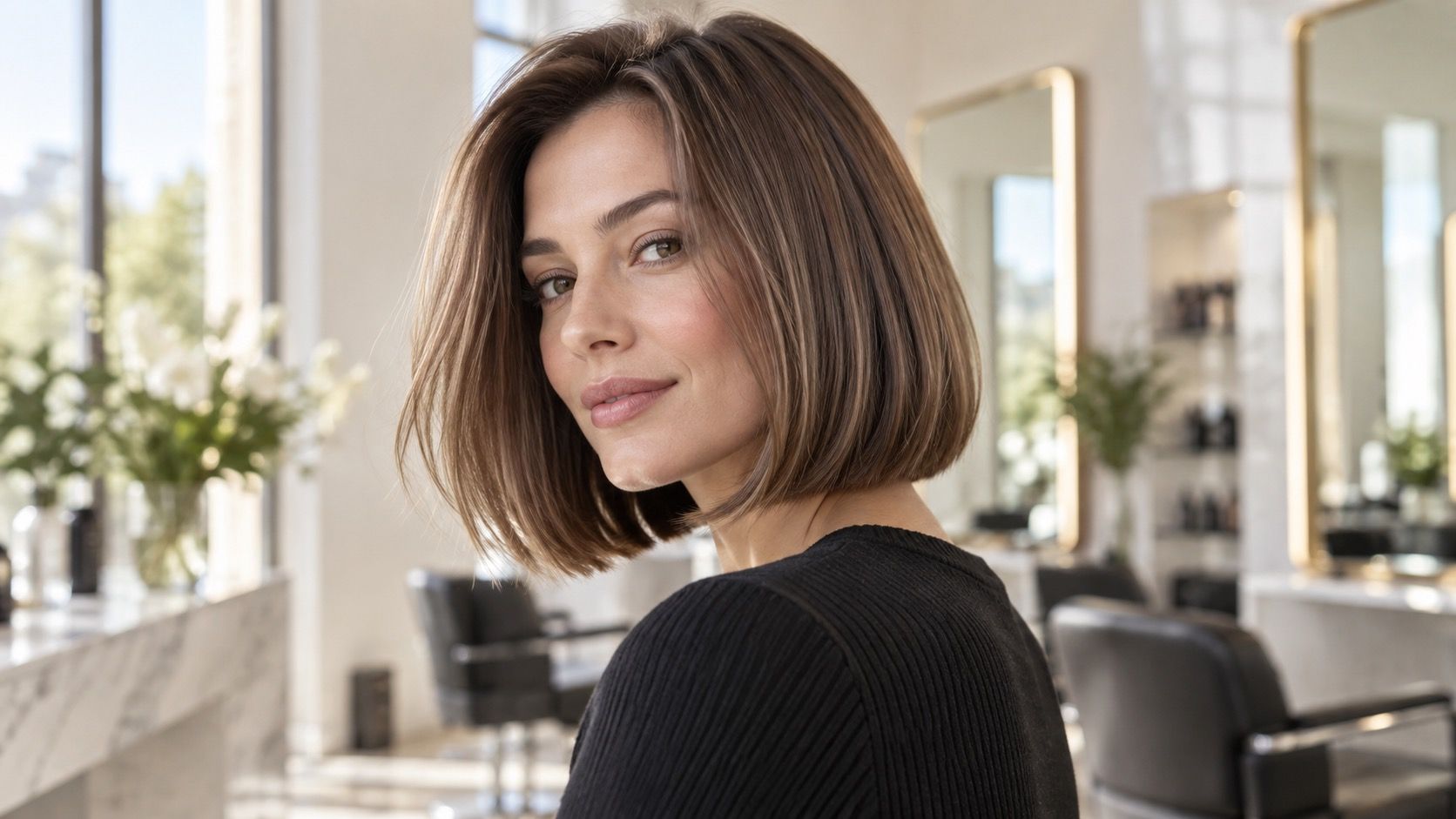
For most thin hair, blunt ends are the useful starting point. A bob, collarbone lob, or one-length shoulder cut gives the eye a firm edge to follow, which makes the total shape read as denser. The cut does not have to be severe: a few hidden interior adjustments can release movement without thinning the visible perimeter.
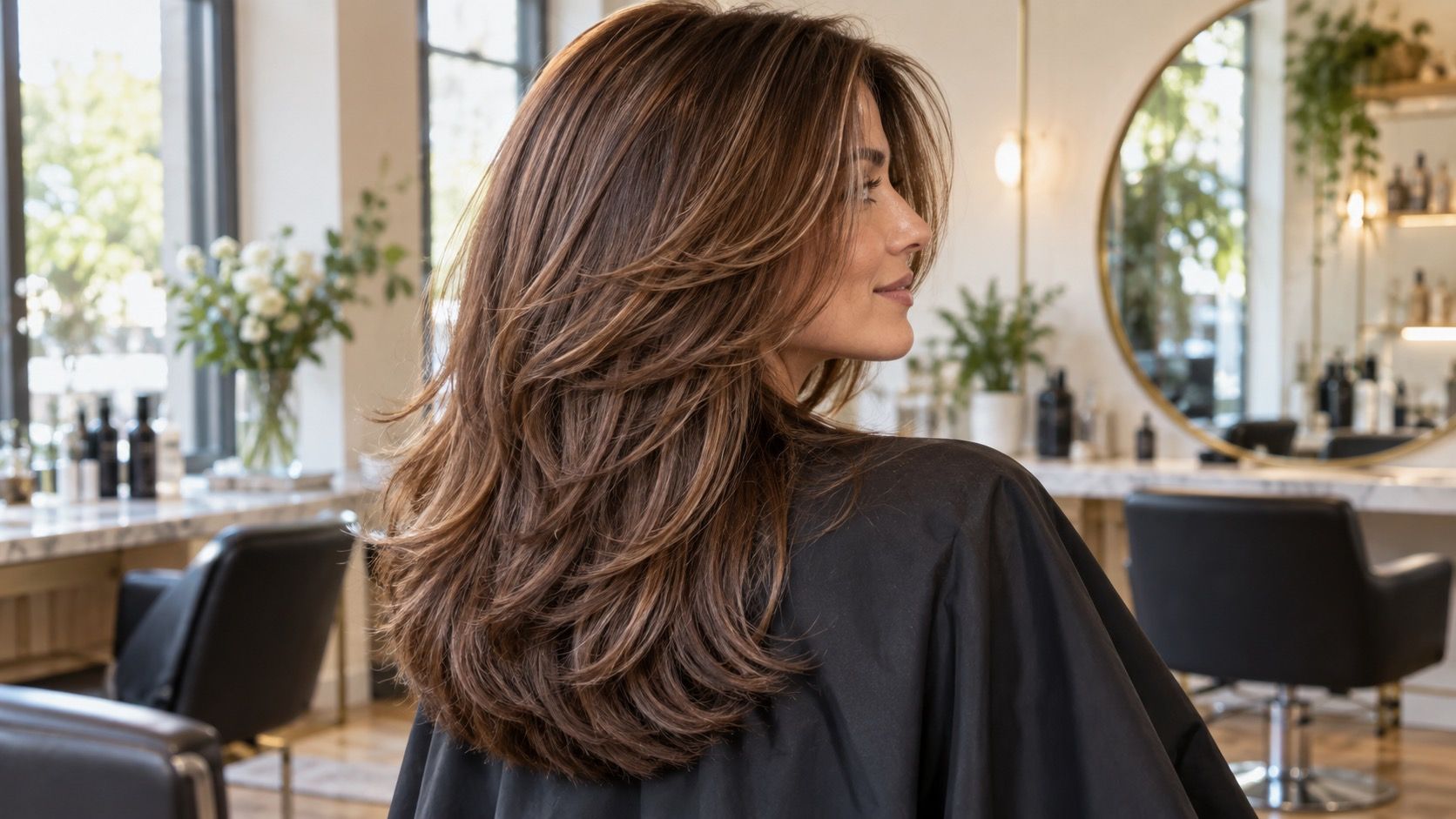
Layers are not automatically wrong, but they need a job. Long, restrained layers can stop medium-length hair from hanging in one flat sheet; lots of short layers can leave translucent ends and force daily curling. When describing a reference photo, point to the bottom line first. It is easier to add softness than to rebuild missing weight.
Use this part of the decision as a small at-home test rather than a rule. Notice what happens on a normal day, in the light you usually see, and after the hair has moved through your routine. A result that works only immediately after styling is less useful than one that still feels balanced later. Take a clear photo from the front and side if you are unsure; it can make the proportion, weight, or color relationship easier to discuss at the next appointment.
Short and medium cuts that create useful lift
A chin-length bob works well when the ends are healthy and the jawline length feels comfortable. A slightly longer front can keep it from looking helmet-like, while a side or softly off-center part can change where the crown has lift. The aim is a shape that holds when air-dried, not a blowout that exists only for the first hour.
A collarbone lob is often the less risky choice for someone who still wants a ponytail. It has enough length to tuck behind the ears yet is short enough that the ends do not look stringy. Ask whether the stylist plans to remove weight from the ends; for thin hair, that phrase deserves a follow-up, because the ends are usually where visual fullness is won or lost.
Use this part of the decision as a small at-home test rather than a rule. Notice what happens on a normal day, in the light you usually see, and after the hair has moved through your routine. A result that works only immediately after styling is less useful than one that still feels balanced later. Take a clear photo from the front and side if you are unsure; it can make the proportion, weight, or color relationship easier to discuss at the next appointment.
Keep longer hair from turning into wisps
Long hair can suit thin hair when the length is intentional and the last few inches are not sacrificed to preserve a number on a measuring tape. Regular small trims keep a strong baseline. A subtle U shape may feel softer than a perfectly straight edge without creating the tapered, see-through finish that deep layers can produce.
Face-framing pieces work best when they begin low enough to join the rest of the cut. Very short framing can expose a sparse temple area or become difficult to blend on rushed mornings. If you wear your hair up often, test the front pieces in a loose ponytail before committing; a cut should work in the styles you actually use.
Use this part of the decision as a small at-home test rather than a rule. Notice what happens on a normal day, in the light you usually see, and after the hair has moved through your routine. A result that works only immediately after styling is less useful than one that still feels balanced later. Take a clear photo from the front and side if you are unsure; it can make the proportion, weight, or color relationship easier to discuss at the next appointment.
Style for support, not for a bigger product pile
Root lift depends more on placement than on a cabinet full of products. Apply a small amount of mousse or root spray to damp roots, then dry the roots in the opposite direction from the final part before letting the length fall naturally. Too much product makes fine strands separate, which can have the opposite effect.
A change of parting is the quickest test before booking a major cut. If the usual center part shows more scalp by late afternoon, try moving it a centimeter rather than forcing a dramatic side sweep. Dry shampoo can add grip on day two, but it cannot replace a cut with a stable outline. The best hairstyles for thin hair make ordinary hair days easier to manage.
Use this part of the decision as a small at-home test rather than a rule. Notice what happens on a normal day, in the light you usually see, and after the hair has moved through your routine. A result that works only immediately after styling is less useful than one that still feels balanced later. Take a clear photo from the front and side if you are unsure; it can make the proportion, weight, or color relationship easier to discuss at the next appointment.
Bring a useful plan to the salon
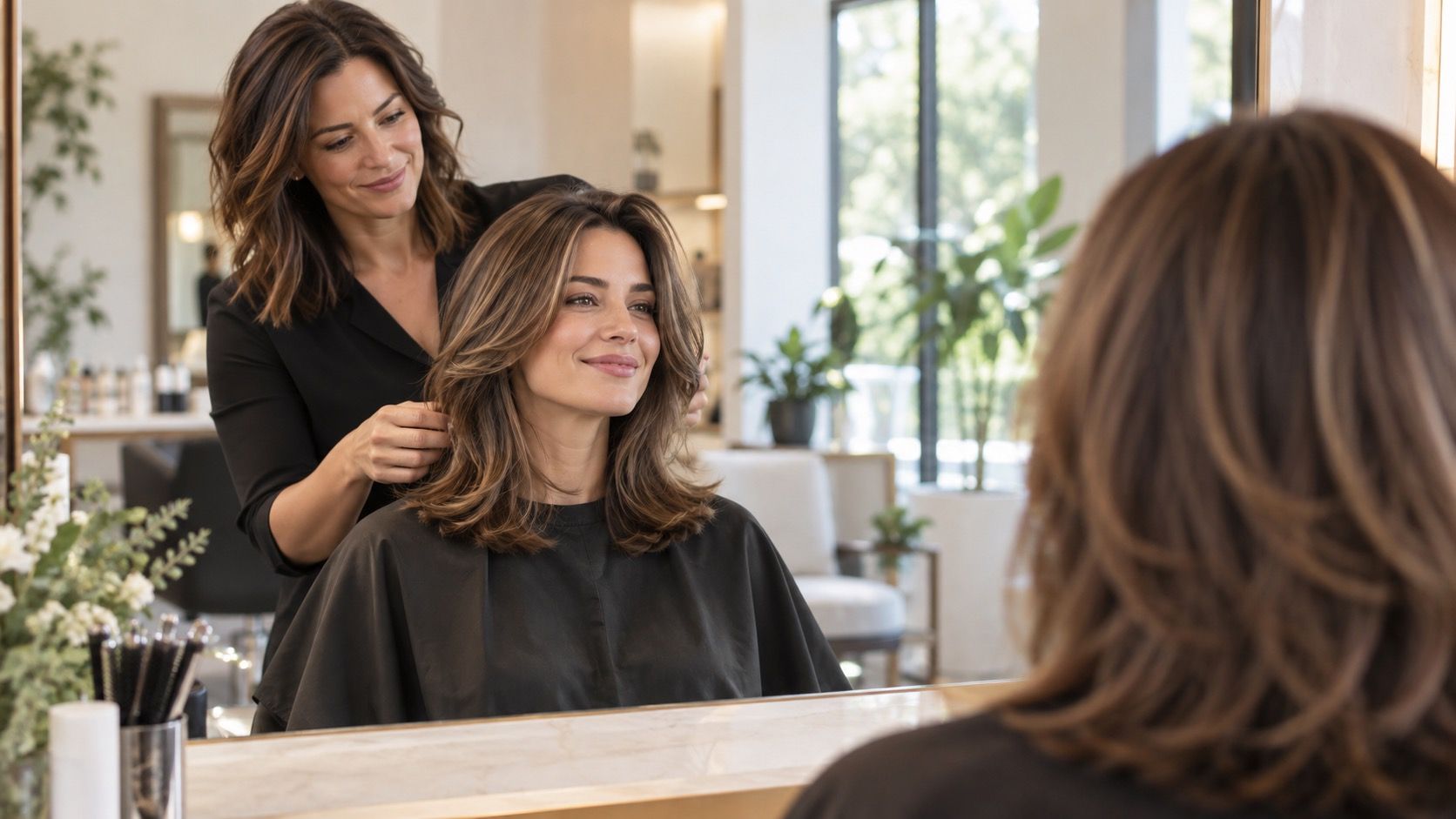
Take one photo of the shape you want on a model with similar texture and one photo of your own hair on an average day. Mention how often you heat-style, whether you need to tie it back, and how the crown behaves after humidity or exercise. Those details are more useful than asking for volume in the abstract.
Before leaving, ask where the weight line sits, which pieces will grow out first, and how to dry the cut at home. A good answer should be specific enough to repeat in your bathroom. If a cut requires a round brush, clips, and twenty minutes every morning to look balanced, it may be attractive but not necessarily practical for your routine.
Use this part of the decision as a small at-home test rather than a rule. Notice what happens on a normal day, in the light you usually see, and after the hair has moved through your routine. A result that works only immediately after styling is less useful than one that still feels balanced later. Take a clear photo from the front and side if you are unsure; it can make the proportion, weight, or color relationship easier to discuss at the next appointment.