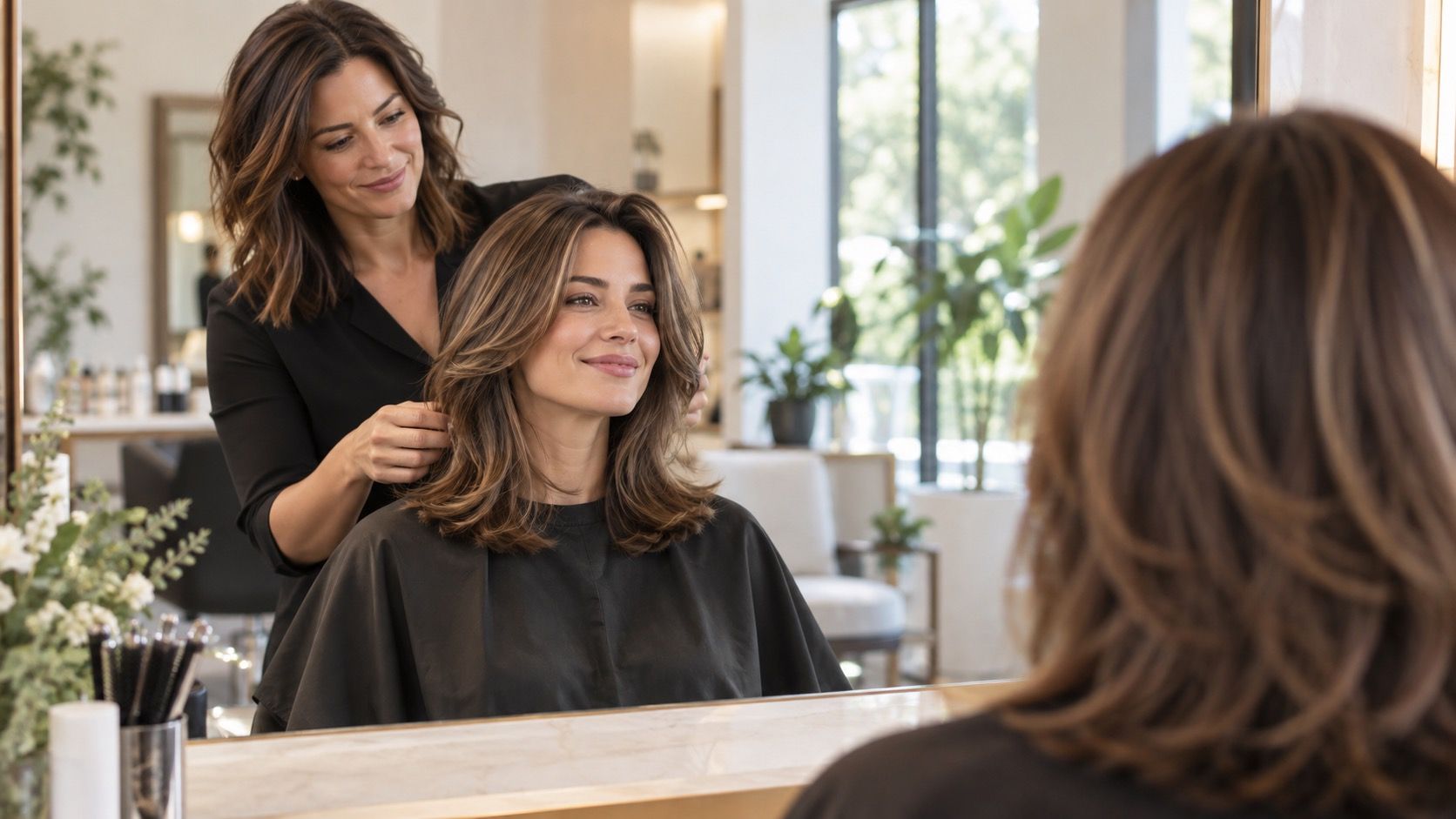
Hairstyles for round faces are often reduced to a few blunt instructions: add height, avoid width, never wear a bob. That is a poor substitute for looking at your real hair. A round face can carry a sleek crop, a full curl pattern, or long layers; the difference is whether the chosen shape works with your density, hairline, and usual styling routine. Balance is a feeling, not a rulebook.
Decide what balance means to you
A round face usually has softly curved edges and a length close to its width, with the cheeks often reading as the broadest point. That description is useful when you are placing a haircut, not when you are trying to make the face look unlike itself. Some people want a little more height through the crown. Others want to draw attention to their eyes, show their cheekbones, or simply stop their hair widening into a triangle after air-drying. Start with the result you want, because the same haircut for round face can solve very different problems.
Long cuts need movement, not endless layers
Use a mirror in daylight and pull the hair back only long enough to see the outline. Then put it down and notice what it actually does. A deep side part can add lift at the roots; a center part can look beautifully clean if the hair has movement through the lengths. Phone cameras held near the face tend to broaden the middle, so do not let one unkind selfie decide that you need to hide your cheeks.
The most useful detail is your natural volume pattern. If the crown collapses while the sides expand, a stylist may build quiet lift at the top and remove bulk from a very specific area. If your hair is fine and flat everywhere, the answer might be a stronger baseline rather than more layers. These are technical choices, not a verdict on your face.
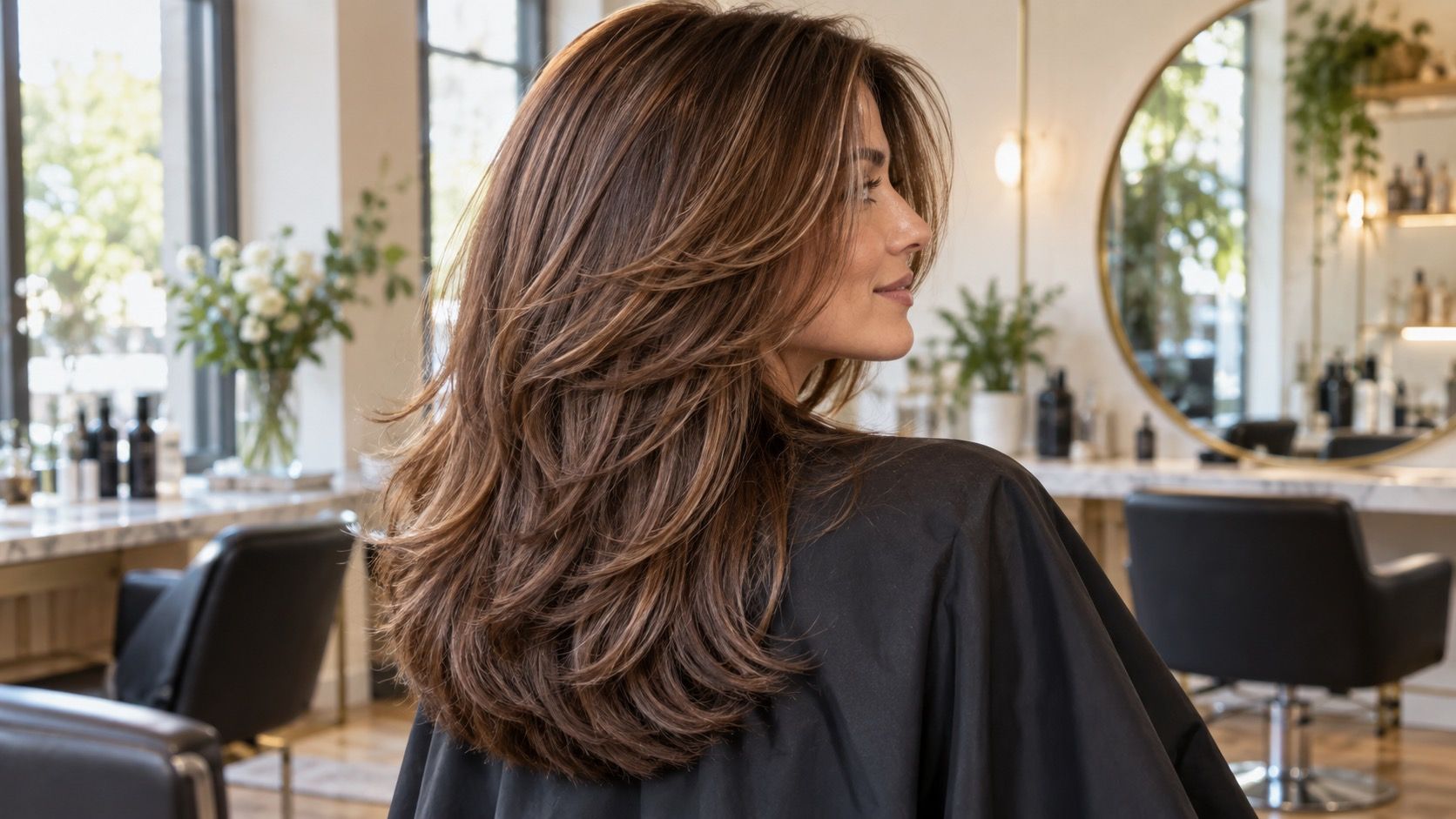
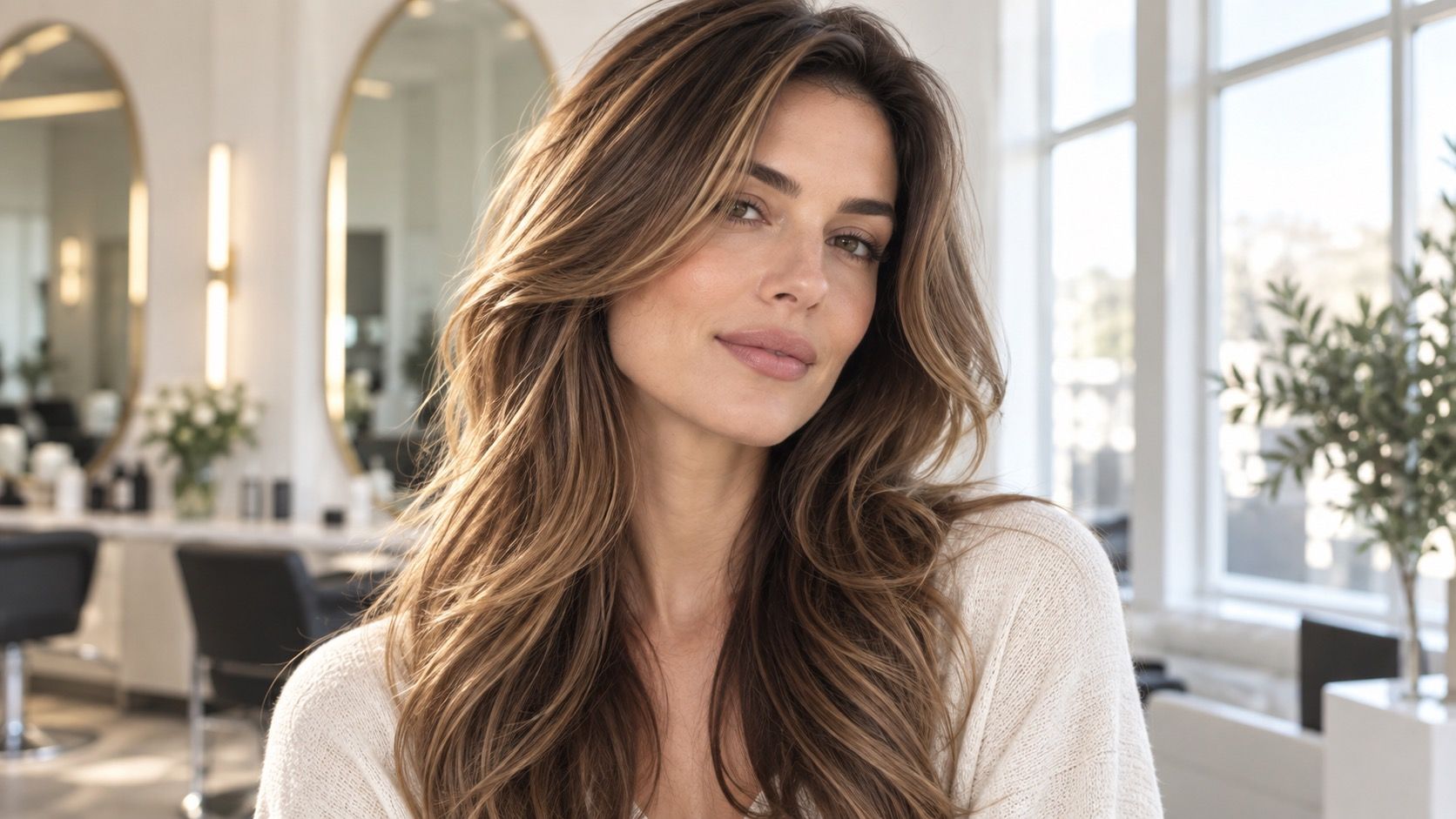
Long hair can make a soft vertical frame around a round face, especially when the length falls below the collarbone and does not sit as one heavy curtain. That does not mean asking for a ladder of short layers. On fine hair, too many layers can erase the weight that makes long hair look healthy. A few face-framing pieces that begin below the cheekbone, plus long internal movement, are often easier to style and grow out more calmly.
With thick or wavy hair, placement becomes even more important. Layers that all stop at the cheeks can create width precisely where you were hoping for a quieter outline. Longer, broken-up shaping gives waves somewhere to bend without turning the sides into a shelf. Ask to see the cut with your natural texture before it is stretched smooth by a blowout. The salon finish is pleasant, but the second morning is the useful test.
A low ponytail, half-up style, and air-dry routine should be part of the discussion. If you wear your hair up for work, tell the stylist how many pieces you expect to stay loose around the face. A beautiful long cut that sheds its shortest layers from every tie is not low maintenance; it is just a nice photograph.
Bobs and short cuts are not off limits
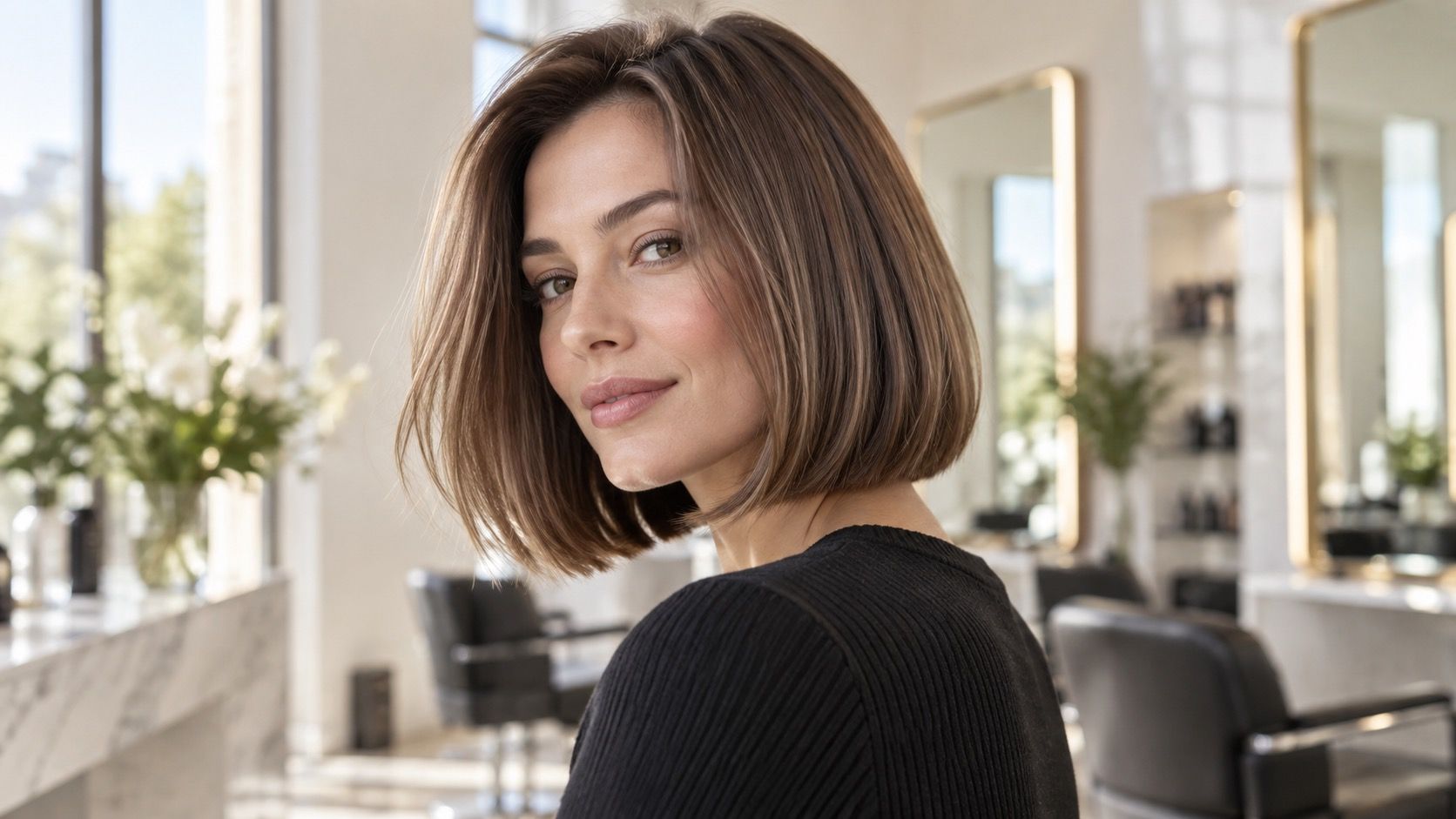
A bob can look sharp and comfortable on a round face when its shape suits the hair. A collarbone lob gives room for a side part, soft wave, or tucked side, which is why it is a useful first short cut for someone nervous about losing length. A chin-length bob draws attention toward the jaw and cheeks. That can be exactly the point if you like that area of your face; it simply needs an intentional line rather than an accidental flip at the ends.
A short crop brings the face forward, so it works best when the stylist considers the crown, temples, and neckline rather than cutting a generic pixie. Some hair needs extra length around a stubborn cowlick. Some needs weight removed behind the ears so it does not mushroom. Ask for a side and back view before finishing, and ask how much of the shape depends on a round brush or wax. The best haircut for round face is not a style you are required to blow-dry every day if you have never enjoyed doing that.
| Cut direction | Why it can work | Question for the consultation |
|---|---|---|
| Collarbone lob | Flexible length with room for movement and pinning back | Will it sit here after my natural wave dries? |
| Long layers | Creates a softer vertical frame without losing all density | Where will the shortest piece begin? |
| Textured bob | Can feel light and deliberate around the jaw | How will the ends behave without heat styling? |
| Short crop | Shows the face and can add crown lift | Which areas need product every morning? |
Use bangs and a part to change the frame
Curtain bangs are popular because they offer flexibility, not because they are magic. Their opening can be adjusted around the brow bone, and longer edges can blend into face-framing layers. A soft side fringe can bring movement across the forehead without making a dense horizontal bar. Straight bangs can also work, but they create a firmer line and need regular trims; choose them because you like that graphic effect, not because a face-shape chart promised a transformation.
Try the parting before you cut. A side part often adds root lift and breaks up an even outline, while an off-center part gives a subtler version of the same effect. A center part can be excellent with loose waves or a longer fringe, but it may make very flat hair look more severe. Move the part after washing, then wait until the hair has dried. The position that stays there without persuasion is more useful than one that looks good for five minutes.
Hairline and glasses matter. A strong cowlick can split a fringe, and thick frames can compete with brow-skimming bangs. Bring your usual glasses to the appointment and mention whether humidity makes your fringe separate. A small adjustment in length or density saves more frustration than any face-shape prescription.
Style the finish you can repeat
For crown lift, begin with drying direction rather than a cupboard full of products. Dry the roots slightly against their usual fall, then let them settle before touching the lengths. A small amount of mousse or root spray may help fine hair, but too much can make it separate and expose the scalp. With waves, a diffuser and a gentle lift at the crown often look more natural than trying to brush every curl into height.
Pay attention to where you create width. A wave that begins around the cheek can look different from one that starts below the jaw; neither is wrong, but they frame the face differently. If you love fuller sides, wear them. If you prefer a longer impression, keep the root flatter at the temples and let movement appear through the lower lengths. The choice should survive rain, a commute, and a rushed morning.
Take a photo after you style the cut yourself, in the light where you normally see your face. If something feels off, name it accurately: too much bulk at the cheeks, a fringe that is too dense, a part that falls flat. Those are easy adjustment notes. Saying that round faces cannot wear a certain cut is not.