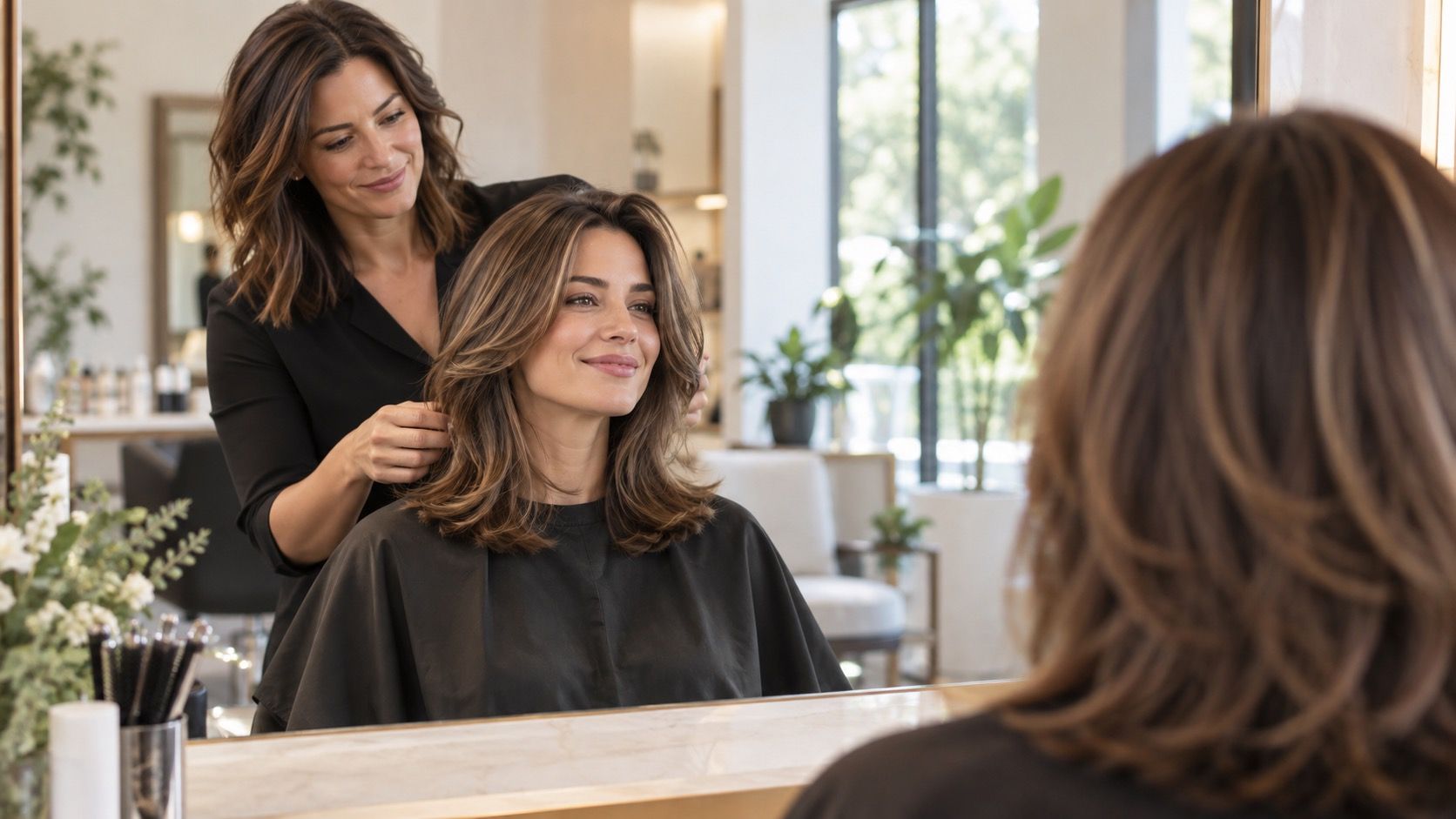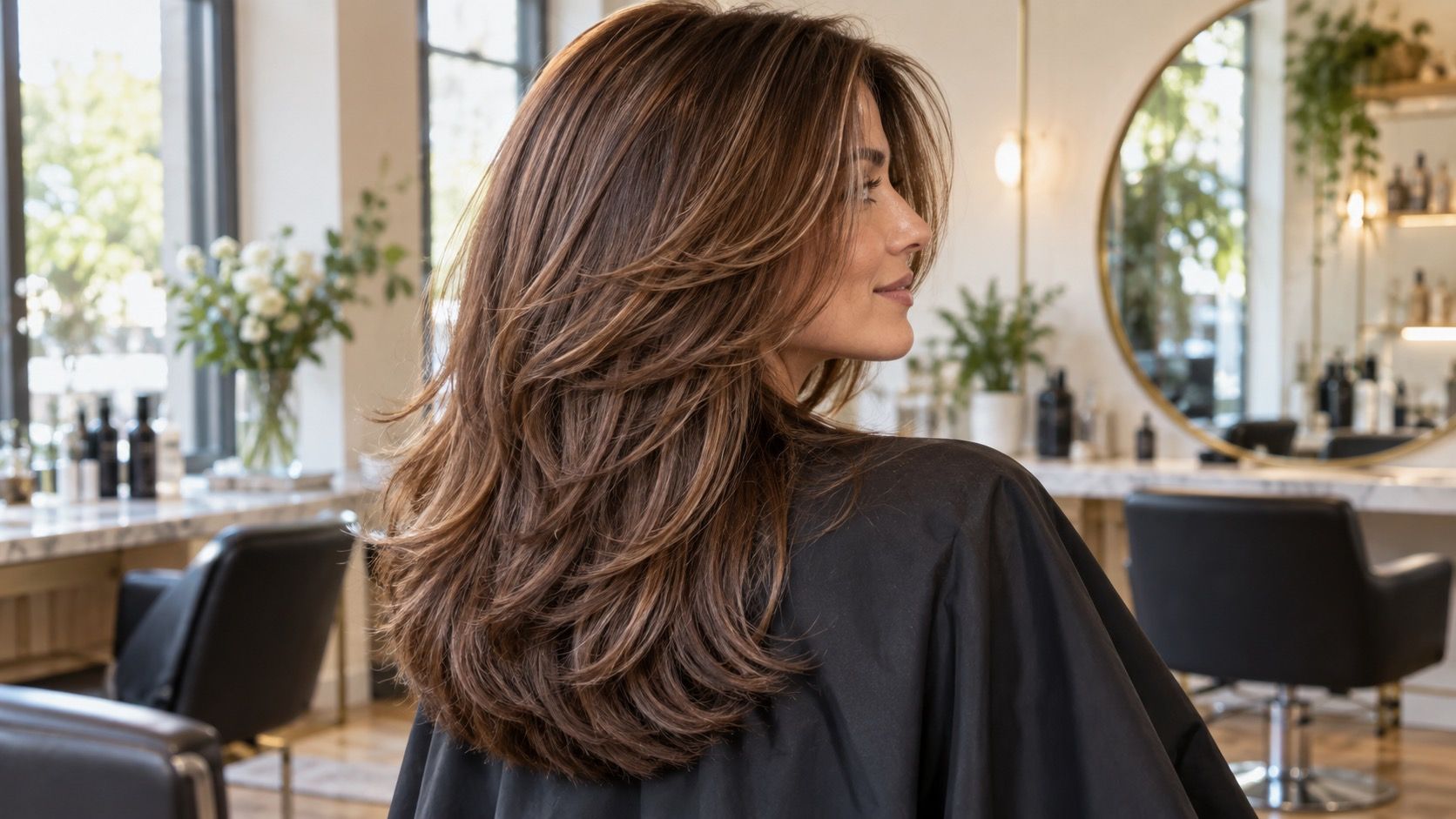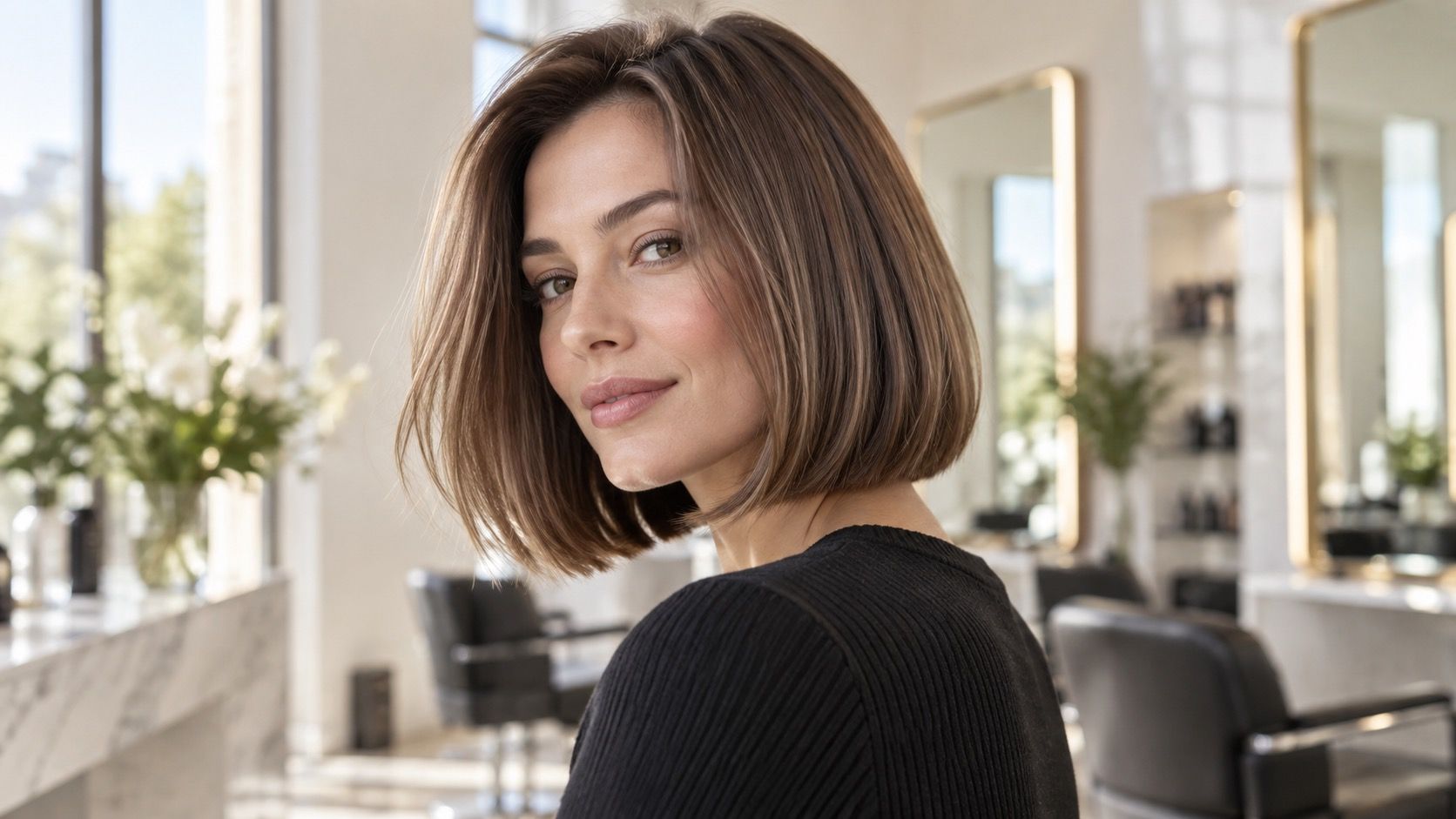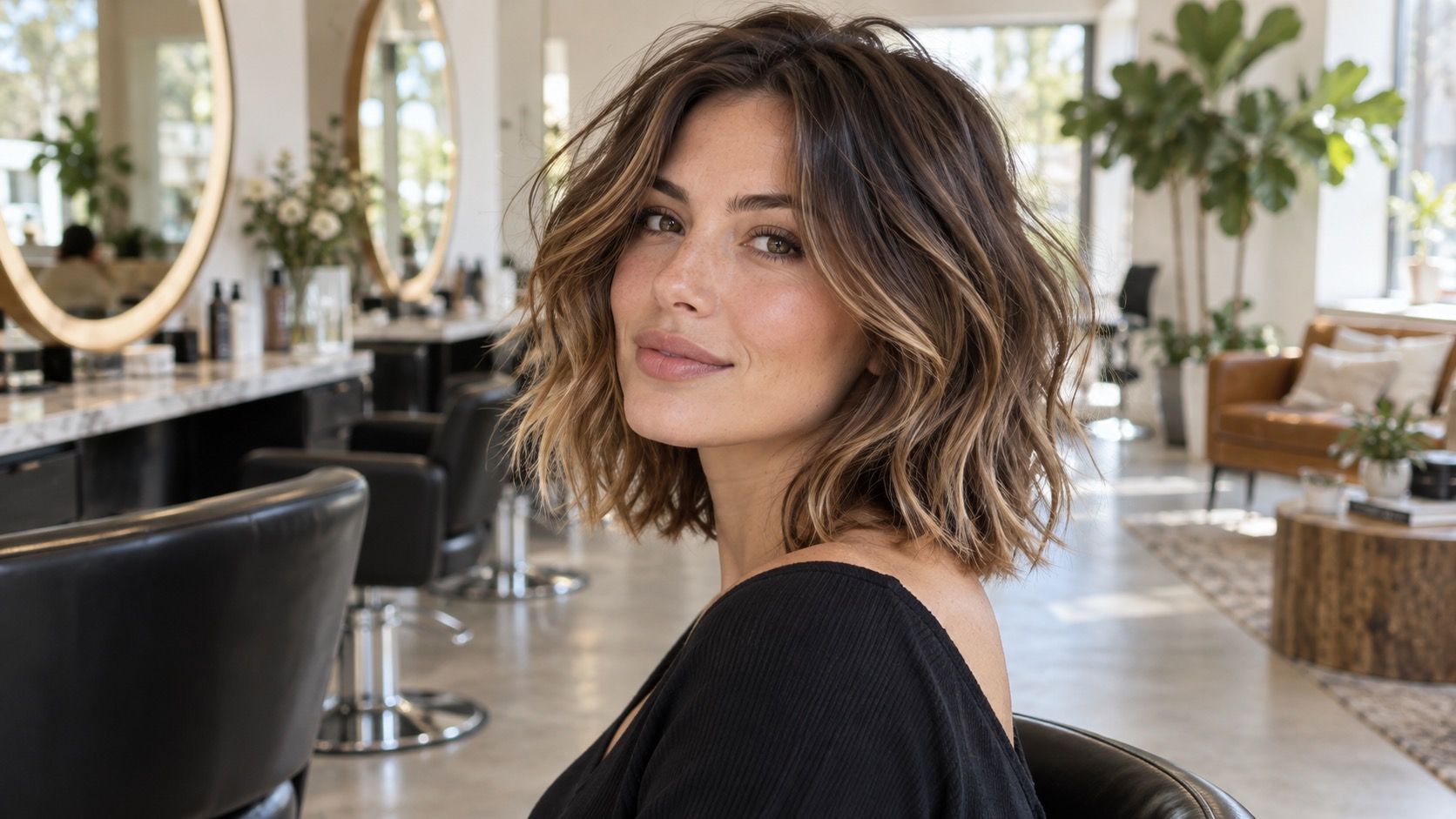
People often hear that oval faces can wear anything, then sit down in a salon with no useful way to choose. That slogan skips the part that actually determines whether a haircut feels good: your texture, density, hairline, and appetite for upkeep. An oval face gives you options, not an obligation to try every trend. The best choice is a shape that makes sense on a damp Tuesday morning as well as under salon lighting.
Why an oval face still needs a plan
An oval face is generally longer than it is wide, with a softly balanced forehead, cheekbones, and jaw. It is a helpful description, but it is not a styling superpower. A very high forehead, a narrow chin, strong cheekbones, glasses, and a natural part all affect the frame more than the label does. Look in daylight with your hair pulled back briefly, then put it down again. The second view matters more because your hair is part of the proportions people see.
Short cuts and pixies need an honest routine
Start with the thing you want from the cut. Maybe you want your jawline to show, your cheekbones to feel less exposed, or your thick hair to stop expanding around the ears. Maybe you simply need to tie it up for work. Those preferences lead to real decisions about length and weight. Asking for the best hairstyles for oval face without them tends to produce a vague, over-layered compromise.
It is also worth checking references against your hair texture. A sleek French bob on fine straight hair and a soft rounded bob on dense waves share a length but not a maintenance plan. A photograph can show you a mood, a fringe, or a perimeter; it cannot promise that your hair will behave in the same way.
A pixie can be freeing because it puts the eyes, brows, and cheekbones in clear view. It can also expose a cowlick, a flat crown, or a hairline that needs a little extra length. Before choosing a short cut, ask what part of the reference you like: the tapered nape, the height on top, the side-swept fringe, or the clean outline at the temple. A good stylist can keep those useful pieces while adapting the shape to your growth pattern.
Short hair has its own calendar. A cropped fringe and a close neckline can look most deliberate for only a few weeks before they need attention. If you enjoy using paste, wax, or a small brush, that is not a problem. If you wash, leave, and go, ask for a softer shape that grows out without a sudden ledge over the ears. A haircut for oval face should not become a daily negotiation with the mirror.
Bring your usual glasses if you wear them. A short cut with long pieces over the forehead can look crowded next to thick frames, while a clean temple area may make the whole face feel more open. See the profile before the appointment ends. The front is only one quarter of a haircut, and the back should not be an afterthought hidden by finishing spray.
Bobs, lobs, and layers offer different kinds of freedom
A bob is not one haircut. A blunt chin bob puts a firm line near the jaw and can look wonderfully deliberate if you like that focus. A softer bob with broken-up ends moves more easily and is forgiving when it is not perfectly styled. A collarbone lob gives you enough length to tuck, clip, or tie back while still making a visible change. For many people, it is the least risky way to test shorter hair.
Layers should answer a specific need. Fine hair may look fuller with a strong baseline and only a few internal adjustments. Dense hair may need weight removed so the shape does not sit like a helmet. Wavy hair benefits from layers that encourage its natural bend, but too many at one level can form a wide shelf. Ask where the shortest section will start and look at that location when your hair is dry, not only wet against the cape.
| If you want | Consider | Ask before committing |
|---|---|---|
| A clear jawline focus | A chin or jaw-length bob | Will the ends flip when I air-dry? |
| One cut with several styling options | A collarbone lob | Can I tie it back without loose short pieces? |
| More movement in thick hair | Long, spaced layers | Where will the bulk be removed? |
| More presence in fine hair | A fuller baseline with restrained layering | Will the perimeter still look dense after six weeks? |
Long hair and bangs need intentional contrast
Long hair on an oval face can look simple and polished, but a single heavy length may become flat or overly severe if it is always worn with the same center part. Gentle face-framing pieces, a shifted part, or waves beginning below the cheekbone can change the result without sacrificing length. The point is not to add movement everywhere. It is to keep the hair from sitting as an unplanned curtain.
Bangs are a separate choice. A straight fringe makes the eyes the focus and creates a distinct horizontal line. Curtain bangs are easier to blend into long layers and less dramatic to grow out. Wispy bangs can feel low commitment, although very fine ones may disappear into dense hair or compete with strong brows. Look at your hairline first. A fringe that fights a strong cowlick often requires more drying than people expect.
Try the part you naturally wear before assuming a center part is compulsory. A slight off-center position can retain symmetry while lifting one side at the roots. A side part can give long hair a more relaxed shape. The best option is the one that remains in place after a walk outside, not the one that required ten clips to photograph.
Choose by texture and upkeep, then explain it clearly
Bring three or four references and label what you like in each. One may show the length, another the fringe, and another the texture close to your own. Mention what has failed before: layers that vanished in a ponytail, a bob that became triangular, or bangs that split by lunchtime. These details are much more useful than asking a stylist to copy a stranger's density and bone structure.
Be direct about your routine. Say whether you air-dry, diffuse curls, use hot tools twice a month, wash every day, or need to wear your hair up. A short pixie, a blunt fringe, and a heavily shaped bob all have different maintenance needs. You do not have to avoid them; you just deserve to know what the shape asks of you before it is cut.
After the first wash, take a daylight photo and see what you actually want adjusted. Maybe the fringe is too dense, the perimeter needs more softness, or the part falls differently at home. Those are clear notes for a small correction. Oval faces do not need a perfect haircut; they need a haircut that feels deliberate and familiar when you style it yourself.