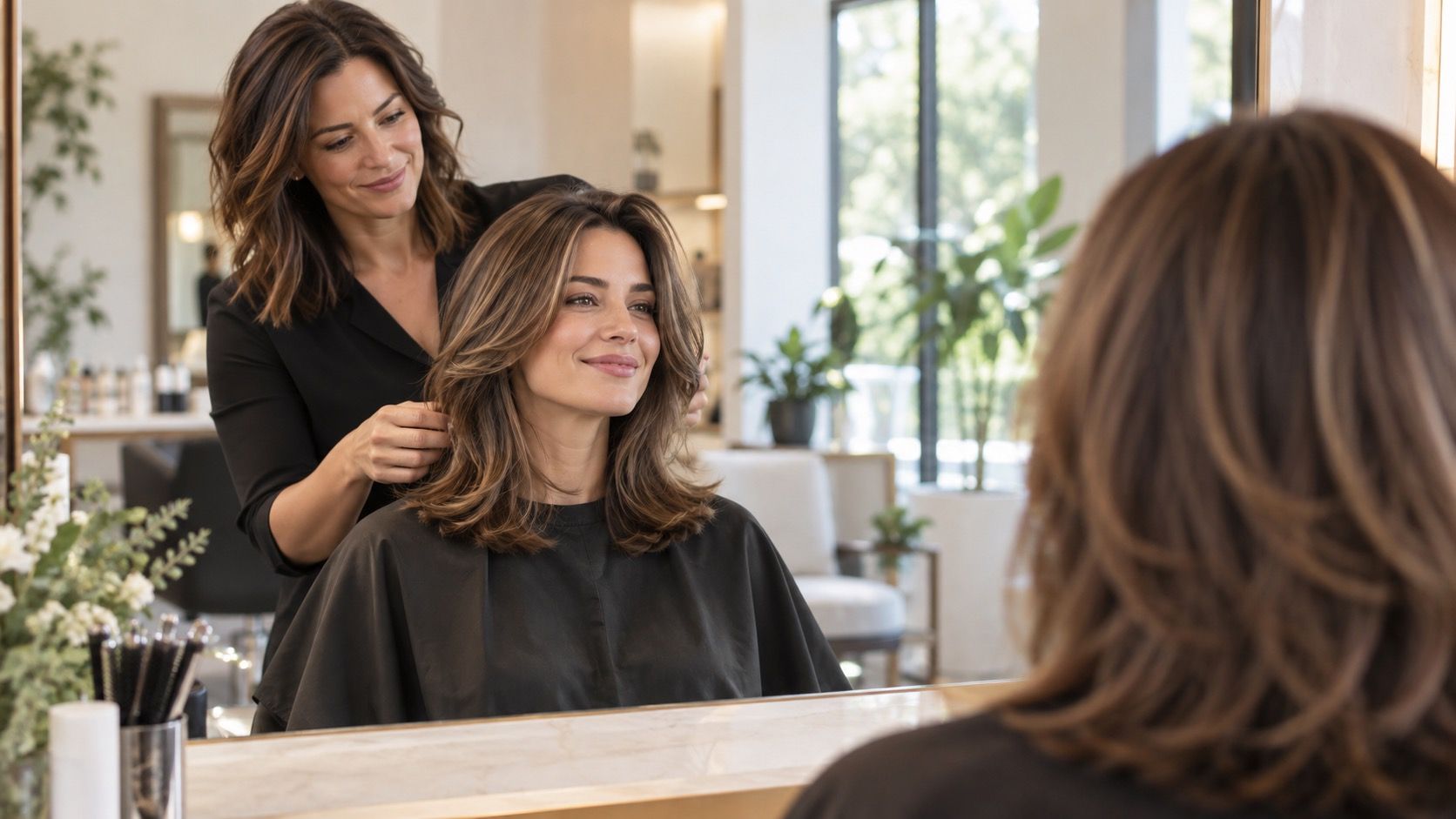
A heart-shaped face often leads to advice about balancing a wider forehead with a narrower chin, but that phrase is only useful when it becomes a real haircut decision. You may want a softer frame at the temples, a little weight near the jaw, or simply a style that does not collapse at the crown. There is no need to disguise a face shape. The aim is to place length and volume where they feel natural with your own hair.
Look at the proportions worth noticing
Heart-shaped faces commonly look broader through the forehead or cheekbones and taper toward a smaller chin. A widow's peak can make the upper face appear wider, while a strong cheekbone can make the same person look closer to a diamond shape. These categories overlap, so use a mirror in daylight rather than tracing a selfie. Notice where your hairline begins, where your cheeks are widest, and whether the jaw narrows gradually or quickly.
Long cuts need movement in the right places
Then put your hair down and see what it already contributes. A center part exposes both sides of the forehead equally. A side part shifts the frame and may lift one side at the roots. Dense curls create their own width; fine straight hair may need a stronger perimeter to avoid looking too narrow at the ends. Hairstyles for heart shaped faces work best when they begin with this ordinary version of your hair, not with a diagram.
Pick one preference before the consultation. Perhaps you like the forehead open and want more presence around the chin. Perhaps you want bangs but dislike the feeling of hair on your face. Perhaps your real problem is that every layered cut becomes wispy after six weeks. Each is specific enough to guide a choice about length and weight.
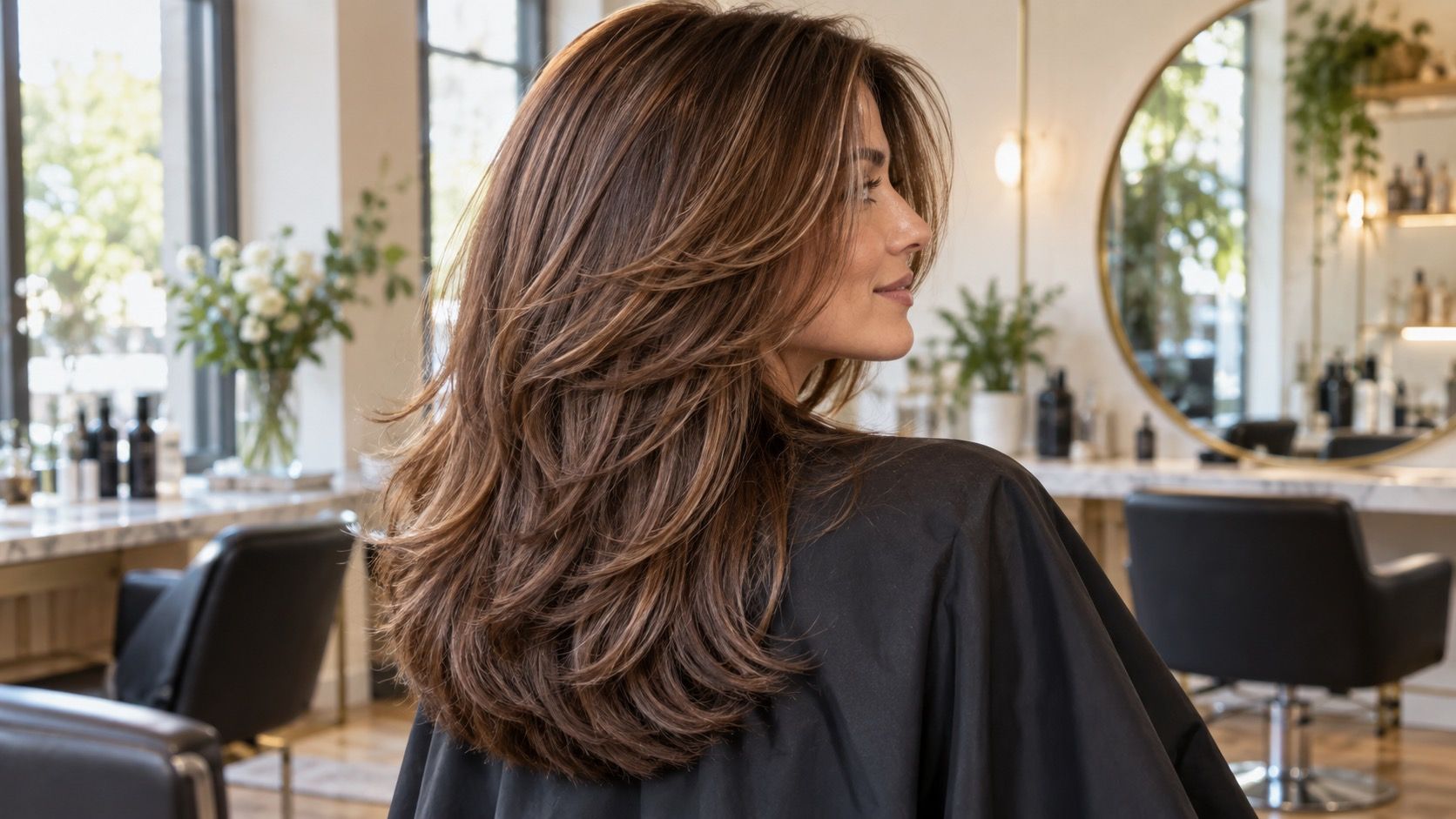
Long hair can make a relaxed frame for a heart-shaped face, especially when it has movement below the cheekbones and through the collarbone area. The easy mistake is adding many short layers near the temples, which can make the upper half of the haircut wider while starving the ends of density. On fine hair, keep the baseline substantial and use a few long face-framing pieces. On thick waves, remove bulk selectively so the shape bends rather than expands.
Face-framing layers that begin around the jaw or lower can draw attention through the lower part of the haircut without making the chin a correction project. Loose waves starting below the cheekbone do a similar job. If you prefer straight hair, a slight curve at the ends or a shifted part may be enough. The useful comparison is between hair that hangs as a heavy curtain and hair that has somewhere to move when you turn your head.
Ask to see the result before it is blown completely smooth. Natural wave, humidity, and the way you tuck your hair behind an ear can change the visible width more than an extra inch of length. If you wear a ponytail for work, ask which pieces will fall out. A cut should work with the way you actually leave the house.
Bobs and medium lengths can add welcome weight
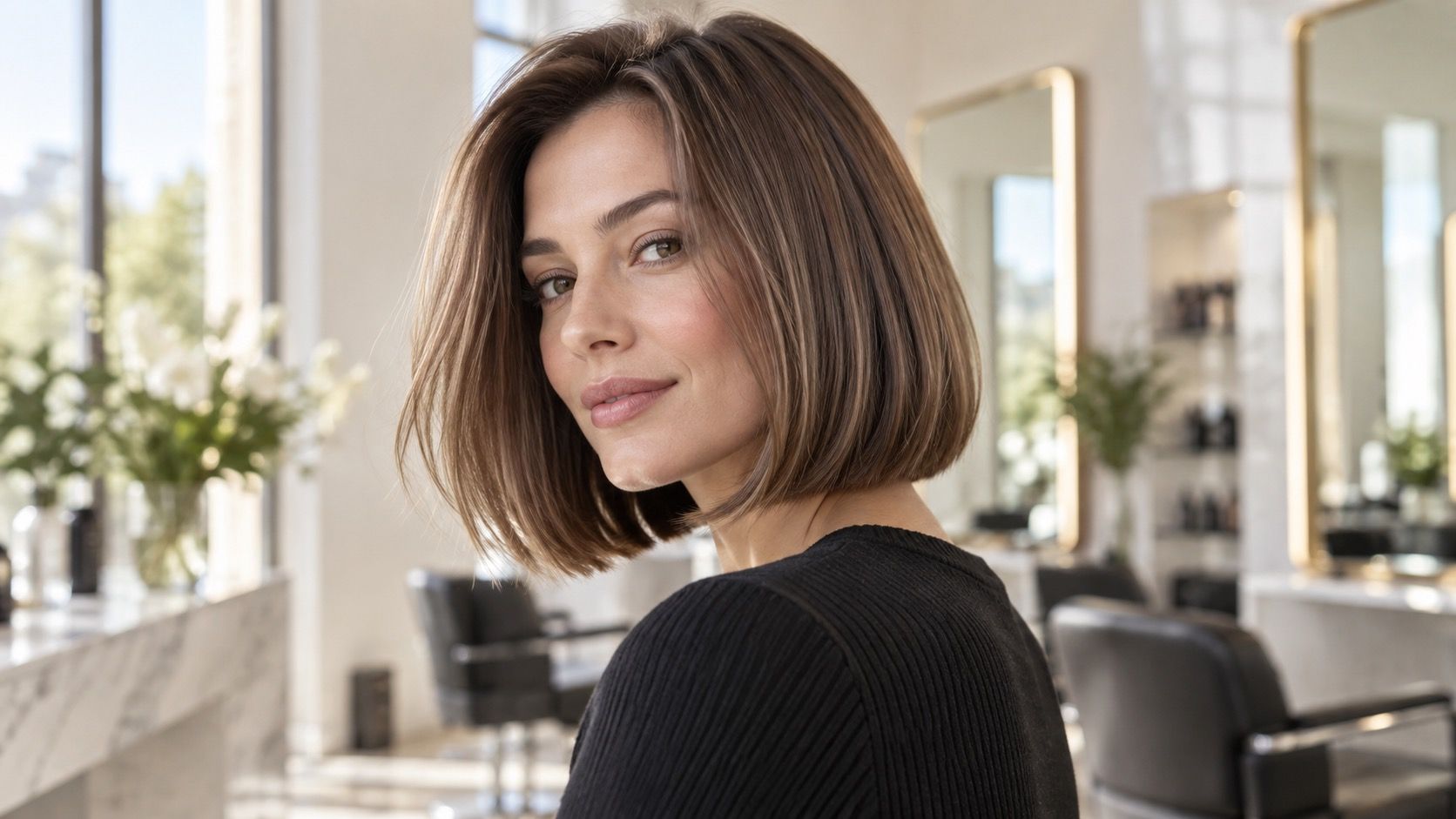
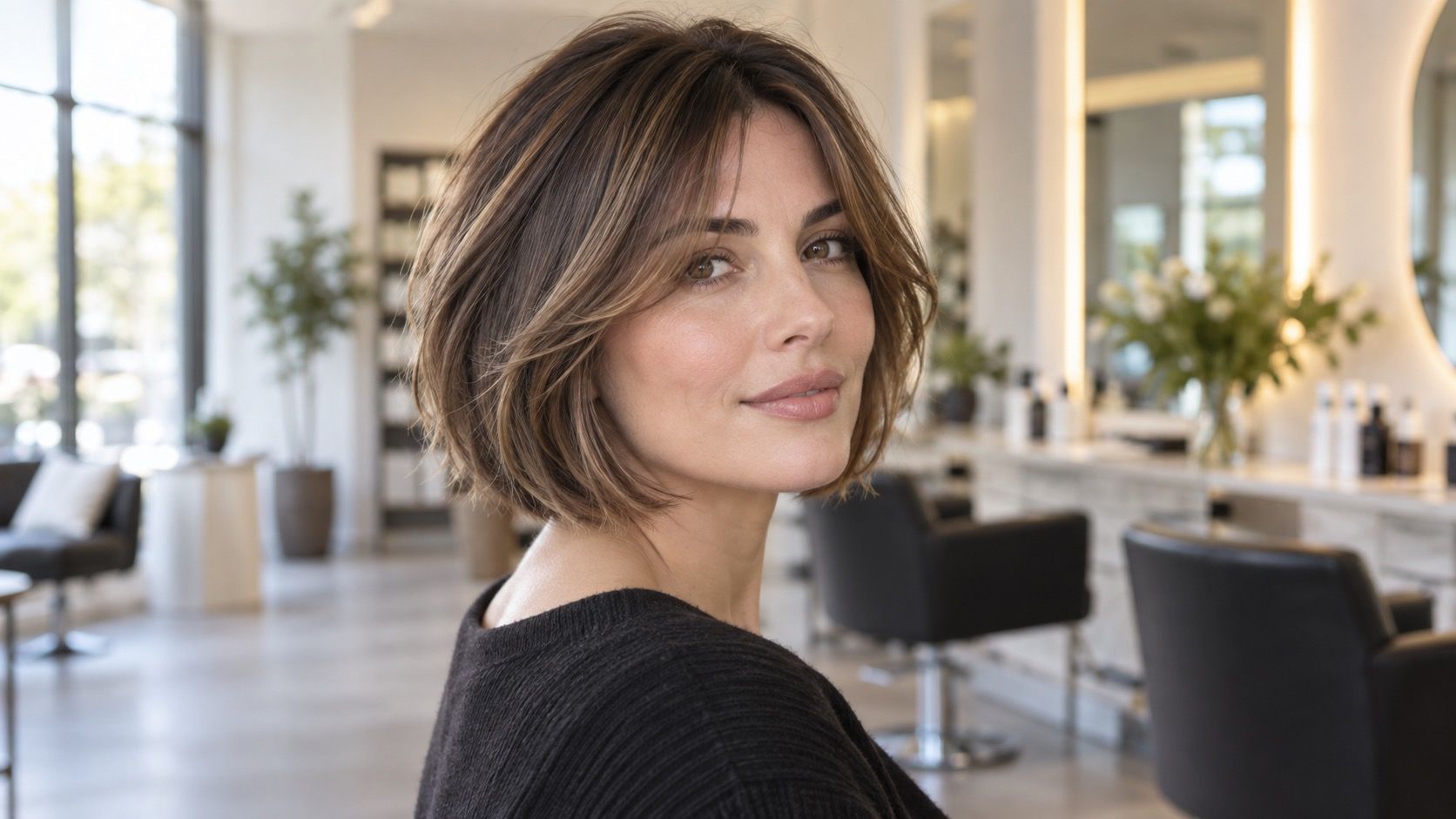
A chin-length bob brings the perimeter close to the jaw, which can feel balanced on a heart-shaped face if you enjoy that focus. It does not need to be a heavy helmet. A soft, slightly textured edge can move when you walk, while a more blunt line gives a cleaner graphic finish. The choice depends on texture: dense hair may need internal weight removal; fine hair may need the bluntness to keep the ends looking full.
A collarbone lob is the less dramatic option and often the easiest to live with. It offers room for a side part, a tucked side, loose waves, or a half-up style. It also lets you test whether you enjoy a shorter silhouette before committing to a jaw-length cut. Tell the stylist if your hair flips outward at the shoulders; a small change in perimeter or internal weight can make the difference between an intentional curve and a daily fight with a brush.
| What you want to change | Starting direction | Check in the mirror |
|---|---|---|
| More presence through the lower haircut | A chin bob or collarbone lob with a defined baseline | Where will the dry ends sit? |
| Long hair without a heavy curtain | Long layers beginning below the cheekbones | Do the ends still look dense? |
| Less emphasis on a high forehead | Flexible curtain bangs or an adaptable side fringe | Will a cowlick split the fringe? |
| Easy day-to-day styling | A medium cut that can air-dry and tuck behind the ear | Can it be tied back when needed? |
Choose bangs that remain flexible
Curtain bangs are useful because their center opening can be changed as the day changes. They can brush the brow, split wider, or blend into layers while they grow. They are not compulsory for a heart-shaped face, but they can be a gentler option than a dense full fringe if you want some framing at the forehead. A side fringe creates a diagonal line and may work well with a side part, particularly when the hair naturally falls in that direction.
A full straight fringe is a stronger design choice. It puts attention on the eyes and creates a horizontal line across the forehead. Choose it if you genuinely like the effect and can accept trims, not because it is meant to solve a shape. Hairline matters here. A strong cowlick can force bangs apart, and humid weather can undo a carefully dried fringe by noon. Start longer if you are unsure; there is always time to cut more.
Bring your glasses if you wear them. The relationship between a fringe, brows, and frames is much clearer in the salon mirror than in a saved photo. A little extra length at the center or less density at the sides can make the difference between a fringe that feels stylish and one that feels crowded.
Use a short consultation checklist
Bring a small group of references rather than one impossible ideal. Choose one picture for length, one for the quality of the ends, and one for the fringe or part. Say what you like: volume around the collarbone, an open forehead, soft movement near the jaw, or the ability to tuck hair away. Say what you do not like, too: overly feathered layers, a round bob, a high-maintenance fringe, or a style that looks dependent on extensions.
Discuss routine before scissors. Mention whether you air-dry, diffuse waves, wear a ponytail, use hot tools, or visit the salon only a few times a year. A cropped bob and a full fringe may need regular shape-ups; long gradual layers offer more time between appointments. The best hairstyles for heart face are not the ones a chart approves. They are the ones you can reproduce without turning every morning into a styling session.
After the first wash, judge the practical details in daylight. Does the weight sit too high? Do the ends feel thin? Does the fringe refuse your natural part? These are precise things a stylist can adjust. A heart-shaped face does not require fixed rules; it gives you a starting point for a haircut that feels balanced because it suits your hair and your life.