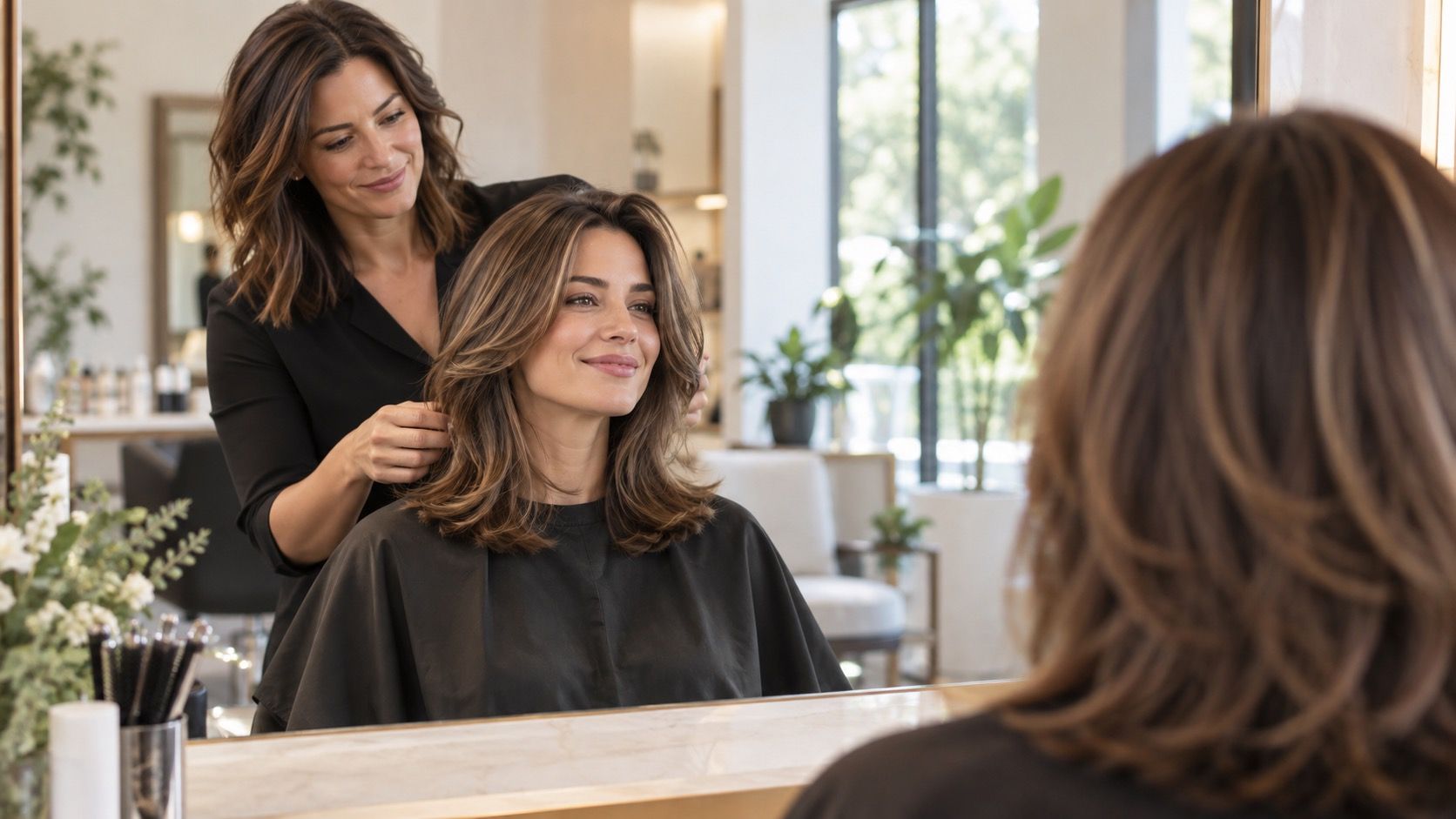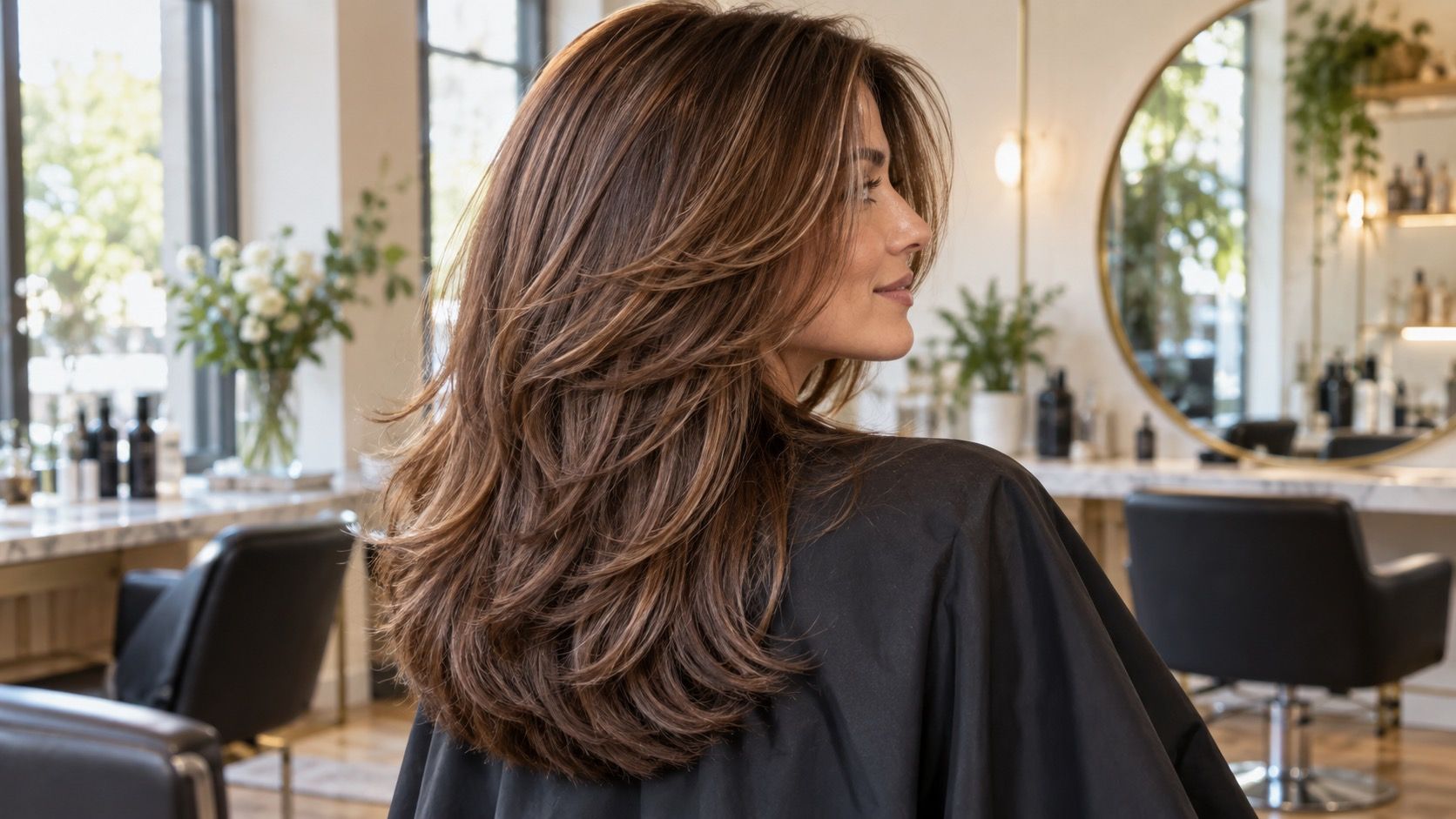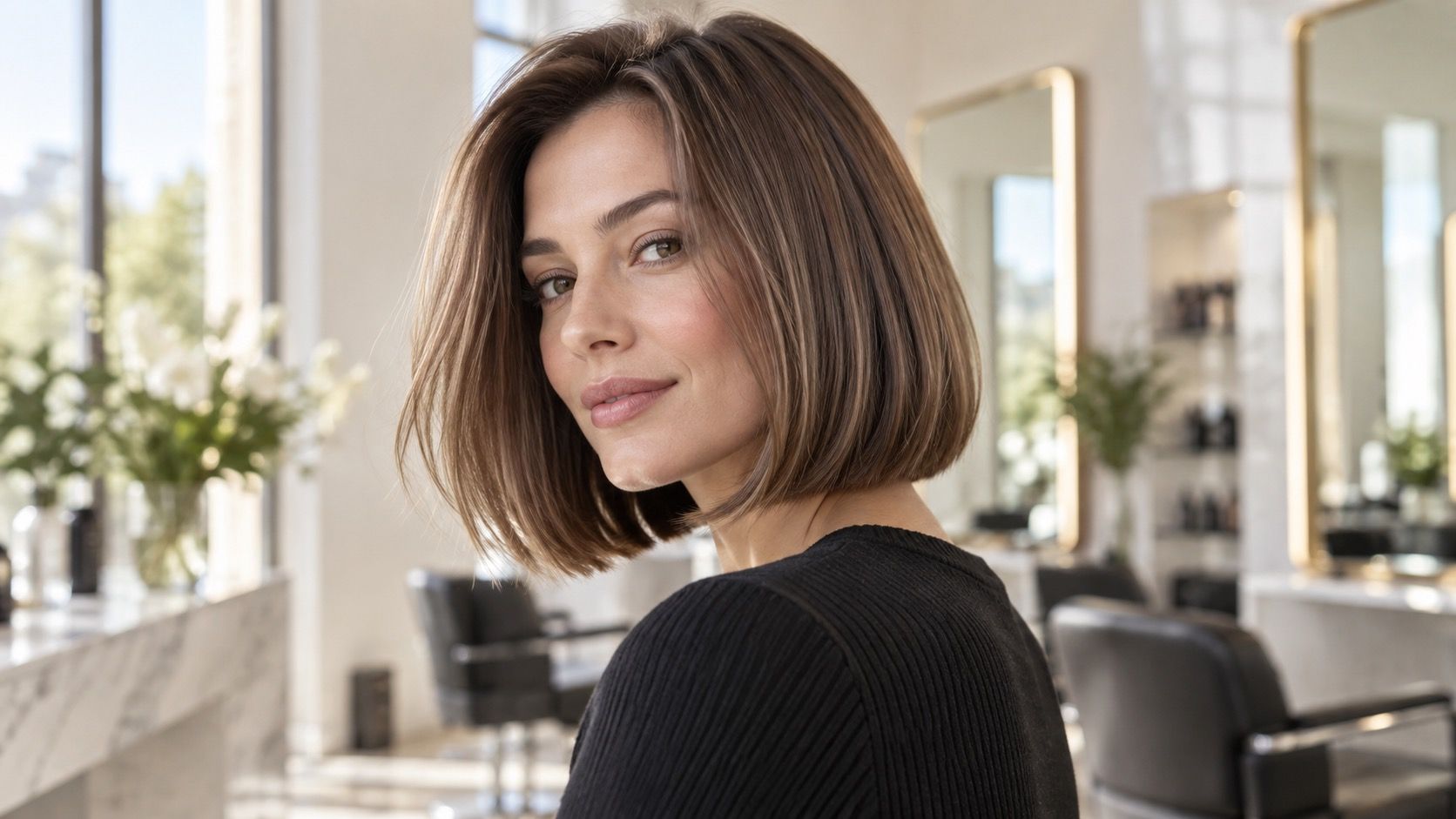
Cool Summer hair colors are usually less about chasing the palest blonde or darkest brunette and more about controlling temperature and contrast. The useful direction is often softly cool, slightly smoky, and close enough to the natural root that the face stays visible before the hair does. Seasonal labels are only a starting vocabulary, but they can help explain why an overly golden color sometimes feels louder than expected.
Start with softness instead of an imaginary perfect shade
Cool Summer is commonly associated with cool or cool-neutral coloring and a gentle level of contrast. In practice, this can mean that a medium ash brown looks more settled than a dense blue-black, or that a muted beige blonde feels easier than icy platinum. The important word is muted. A shade may be cool without looking grey, and it may be soft without looking dull.
Choose blonde and brunette directions by depth
Look at the natural root, brows, and the shadow beneath the cheekbones before choosing a change. If those features are medium and low-contrast, a very inky all-over color can make the hairline look separate from the face. A color with a little translucency—cool brown, dark ash blonde, or a softly blended root—usually gives more room for everyday makeup and changing light.
This is not a test that declares who may wear a color. A dramatic shade can still be enjoyable. The point is to notice the tradeoff: clearer, deeper colors demand more contrast from brows, clothing, or makeup, while quieter colors tend to let natural features set the pace.
For lighter hair, beige ash blonde, pearl-toned highlights, and dark ash blonde are often easier to wear than yellow gold. They do not need to look silver. A good salon result may keep a neutral base with cooler pieces around the face, so the color catches daylight without turning every strand pale. This is especially helpful when the natural root is medium brown and frequent root lightening would be tiring.
For brunette hair, cool mushroom brown, taupe brown, and softly ashy medium brown are useful Cool Summer hair color directions. They retain enough depth to frame the face but avoid the orange reflect that can appear as warm brown fades. Ask to see a reference in ordinary indoor light, not only a polished salon photo. Some “cool” browns are simply very dark; if the face loses softness, choose a lighter depth rather than adding more ash.
| Direction | Why it can work | Watch for |
|---|---|---|
| Dark ash blonde | Soft brightness without a sharp root line | Too much toner can read flat on porous ends |
| Mushroom or cool brown | Natural-looking depth with restrained warmth | Warm fade can show after repeated washing |
| Beige highlights | Light around the face without an all-over blonde change | Overly bright pieces can create stripey contrast |
Use the natural root as part of the design
A visible root is not automatically a maintenance failure. For many cool summer hair colors, a softened root gives the rest of the color context. It prevents highlights from looking pasted on and lets the eye adjust gradually from skin to hair. Root smudging, lowlights, and fine woven highlights can all create this effect without turning the appointment into a solid-color correction.
Bring attention to the hairline. Bright face-framing pieces can be flattering, but they should have a similar softness to the rest of the hair. A narrow bright ribbon next to a medium natural root may look more graphic than intended. Ask for diffusion at the top and a little deeper color underneath, where the hair naturally holds shadow.
Grey blending often benefits from the same approach. Instead of trying to cover every silver hair with a dense cool brown, a mix of fine highlights and lowlights can make regrowth less obvious. The exact choice depends on density and texture, but the practical goal is an even overall impression rather than an opaque surface.
Keep unwanted warmth from taking over
Cool color does not stay frozen. Sun, hot tools, minerals in water, and repeated shampooing can expose warmer underlying pigment, especially through bleached lengths. That does not mean every appointment needs a stronger ash formula. Too much cool toner can leave hair looking smoky at the ends and greenish against very pale highlights. The better plan is a color that has enough neutral support to fade gracefully.
At home, use a toning product only when you can actually see a shift, not on a rigid daily schedule. Purple products work differently on pale blonde than blue products do on brunette hair, and both can grab porous areas. Alternate them with a gentle shampoo and pay attention to the front pieces, which often fade fastest from heat and face-washing.
Photograph the color near a window every few weeks if you struggle to judge it day to day. A simple series reveals whether warmth is appearing evenly, whether the root is still blending, and whether your favorite result was actually softer than you remembered. That is more useful than chasing a cooler filter every time the bathroom light looks yellow.
Build maintenance around real life
Before choosing a cool summer hair color, decide what you want to maintain: a polished toner, bright highlights, or simply a flattering overall depth. A dark ash blonde with a blended root may need a refresh for shine and tone while allowing several months between major lightening. A very pale beige blonde may require more regular toning and careful heat protection. Neither is better; they ask for different habits.
At a consultation, describe the version of the color you want after six weeks, not only the freshly styled result. If you prefer softness, say that you would rather keep some neutral warmth than return every few weeks to fight it. If you wear minimal makeup and low-contrast clothes, explain that sharp pieces around the face are not the goal. Those details help turn a seasonal-color idea into hair that behaves well outside the salon.
The most wearable result usually has a little flexibility: cool enough to avoid obvious brass, deep enough to suit the root, and soft enough that a normal day of wind, dry shampoo, and indoor light does not undo the effect.